
Picking Up the Threads

Pen, notebook and computer keyboard.

My husband came home from hospital last week. He is still on heavy medication and convalescence, when it comes, will take a long time. But in the meantime, I no longer have to make the hour-long round trip to the hospital every day so, with the time regained I am starting to pick up the threads of my historical writing.

As a result, the first chapter of The Return of the Soldier now exists as a discrete file on my computer and is nearly 5,000 words long. It has a central argument, logical connections between points, and a clear direction towards the 2,000 or so words I still need to write about personal experiences of living in interwar housing. And, at the moment, I hate it. It feels unoriginal, overstuffed with facts, overly reliant on familiar sources, top-down in approach. While part of me knows that this draft is better than the wordy, overly complex mess that was the previous iteration, and that these feelings are to be expected as part of the process (Chapter 1 of An Equal Burden was almost exactly as painful to write for the same reasons), part of me, the emotionally exhausted part, remains frustrated and questioning what the hell I am doing.

I tell myself to be kind to myself, that I have been through a deeply traumatic experience this past month, one that is on-going. I reassure myself that something is better than nothing, that little and often is making a difference. But I remain torn, between the desire to stop and set this chapter aside until I know what I am doing with it and the need to finish it, to get those elusive couple of thousand words on a page, words that I hope will clarify what this chapter is doing beyond rehearsing other people’s arguments and providing lots of names, dates and facts.

Which brings me to the article recently published by Craig Fehrman, author of a new history of the Lewis and Clark expedition, which I recently stumbled across. In it, Ferhman describes how his own recent traumatic experience, of being mauled by a neighbour’s dog, changed his approach to analysis in This Vast Enterprise. ‘Historians and nonfiction authors,’ according to Fehrman, ‘often glide over lived experience. They prefer actions, citations, details, dates.’ On the one hand, I have some sympathy with this view. It is, after all, exactly the approach I have taken so far in my current chapter. On the other hand, it is exactly this that is making me hate my chapter so much. Because by instinct and practice, as a historian I have always focussed on lived experience, rather than seeking to glide over it.

It is always slightly disconcerting to read work by professional historians (that is, those who communicate historical research in order to earn a living) that identifies a methodological approach or source base that I have long been familiar with as a new discovery. Here, Fehrman appears to discover the methodology of close reading of personal narratives and the debates central to histories of subjectivity and emotions. ‘[M]y best discoveries,’ he writes, ‘came from reading … journals closely.’  At the same time, he acknowledges that ‘no matter how hard I tried, I would never be able to access fully the bodies and minds that survived this expedition.’ I could have made both these statements when writing Men of War and, indeed, spend a good deal of time in the introduction working through the problem of just how much I could claim about men’s feelings in the past (pages 7-12 if you are interested). And, in the decade and a half since I published the book, I have taught innumerable introductions to gender and cultural histories introducing undergraduates and postgraduates to these discussions.

Fehrmann is not an academic (although he appears to have started work on a PhD), has a book to sell and is writing for an online platform specialising in culture and sports writing. There is no reason why he should (and some pretty good ones why he shouldn’t) have detailed knowledge of or engagement with some of the more abstruse aspects of historiography and historical methodology. But his article caught my attention not so much because it addresses questions of the relationship between personal trauma and the writing of history that feel particularly pertinent to me at the moment, but rather because the claim to originality that Fehrman makes goes to the heart of my discomfort with my current chapter. As much as I know that I do have something original to say about the importance of returning ex-servicemen to 20th century British society, I am also aware of how many social histories of Britain exist, not least histories of Britain in the two decades after the First World War. What on earth am I doing that will add anything new to what has already been said? And how can I do it in a way that is both informative and entertaining?

These were questions and fears that I was already facing when my husband got ill. Now I have to work out how to tackle them as I also face the challenges of caring for a recuperating invalid, two teenagers and four hens. These challenges will, I suspect, make it a different book from the one it would have been had my husband not fallen ill, just as for Ferhman, ‘Something changed in my book because something changed in me.’ I am still to close, both to the writing process and the trauma, to have any clear sense of what that change may be. For the moment, however, I think the answer to my questions may be not change but more of the same. I need to return to those familiar methods of close reading of subjective experiences of the past. It is, after all, the men who returned and the families and communities that they returned to, that are the subject of this book. Having been forced to concentrate on other things for the past month it is, I think, time to spend a bit more time thinking about them and their lives again.
Taking Stock

It has taken a week, but I have finally unpacked all the boxes of books and papers and accumulated office accessories that I acquired over 15 years at Leeds. So now that I am fully installed in my home office, it seemed like a good time to enumerate the projects I have underway and planned, and what I hope to acheive in the next 18 months.

Men of War: A Modern History

Under contract with Polity Press, with the manuscript due in 2028, I currently have aproximately 10,000 words of a very, very messy draft of Chapter One and a detailed outline of all eight chapters. The goal is to have a completed first draft by the end of the calendar year. I anticipate this being a complete mess, with the aim of a serious edit the following year.

The Return of the Soldier: British First World War Veterans and the Making of Twentieth Century Britain

This one is now on is fourth or possibly fifth subtitle as my ideas have shifted through the drafting process. I currently have between 3,000 and 5,000 words drafted for three of the five chapters, with a plan for a conference paper for the fourth chapter in the works. These will then form the cores around which I will build the longer chapter, with a full draft of ‘Return Home’ next on the agenda so that I can send it out to publishers and agents for consideration. The goal is to have a contract for this one by the end of the year.

The Return of the Soldier: British First World War Ex-Servicemen and the Making of the Twentieth Century

This project is now on its fourth or fifth subtitle, but, after far too long, I think I finally have a central thesis and a sense of the voice for this book. I also have 3,000 to 5,000 words for three of the five body chapters, with plans for a conference paper that will give me another 3,000 words for the fourth. These will go on to form the cores of the longer chapters. What I don’t currently have is a publisher so, in addition to the conference paper, my next step will be to write up the chapter on ‘Returning Home’ for submission to publishers and agents. The goal is to have a contract for this book by the end of the year.

A chapter on the ethics of doing disability history, accepted subject to minor ammendments.

This is due in two weeks, so is currently at the top of my priority list.

An 8,000-10,000 word chapter on front-line battlefield medical care.

I still need to check with the editor what the temporal and geographic scope of the expected chapter is. Submission in June.

A history of Golden Age detective fiction and the two world wars.

I can’t really let myself commit to this one until I have the two on-going book projects much nearer completion, but I do want to get a proper proposal off to an agent. This is the one that has the most potential as a trade history, I think. Certainly, everyone I have mentioned it to has been very enthusiastic and encouraging. In the grand tradition of writing procrastination, this is, of course, the book I want to write at the moment.

The novel

I keep telling myself that this one is just for fun, that I have to prioritise the non-fiction because that is my bread-and-butter and where I am more likely to publish successfully. Really, I need to stop researching this one and just get on with writing it.

This blog

I am hoping to post on here once a week, but I am also aware that doing so risks taking writing time away from other projects. Indeed, this post has taken two days to write in what is an exceptionally busy week of family responsibilities and pre-existing commitments. So while a weekly post will be my goal, I will need to reassess this if either of the book projects start to suffer. In which spirit, I had better stop writing about writing, and get on with actually completing that chapter on ethics!

Hello again

Last week I had a day haunted by my mother. It started with an unexpected email from a very old friend of hers with good wishes for the new year. Then there were the references to Jim Kitten’s work for Lyons’ catering arm in Matt Houlbrook’s The Song of Seven Dials which I am currently reading, prompting me to think about how the histories of migration and social integration my mother was mapping through her family history research in the final years of her life can engage with those Matt exposes in his excellent book. And finally my husband suggested that we watch Ben Stiller’s documentary about his parents, Jerry Stiller and Anne Meara. My brother had recommended it to us over the holidays, on the basis that there were a lot of shots of the apartment building where we grew. The Stillers were our neighbours, quite literally next door, occupying 5AB while we were in 5D, sharing a back hallway for the bins and the emergency exit stairway.

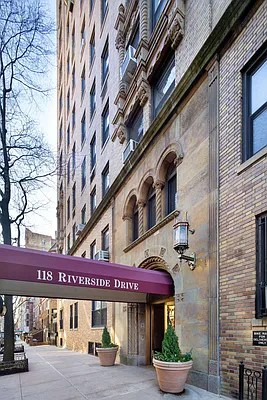
The emotional gut-punch of the film for me, however, wasn’t so much the images of the distinctive awning at the corner of 84th and Riverside, and Riverside Park, or even the Proustian emotions evoked by pictures of the Stillers from the 1980s, familiar from regular encounters in the lobby of a building Ben refers to accurately as its own eco-system. Rather it came from the framing of the documentary not only around the hours of home video and tape recording that Jerry Stiller made and preserved, but the clearing of the apartment and its subsequent ‘staging’ by realtors for sale. Because, about a year before, the same thing had happened in my mother’s apartment following her death from pancreatic cancer in 2018. (I say my mother’s apartment because it was the place she lived for nearly forty years, raised her children and died. It was also my father’s apartment throughout my childhood, but he gave her full ownership when they divorced at the turn of the 21st century, after which she redecorated, making it very much her own.)

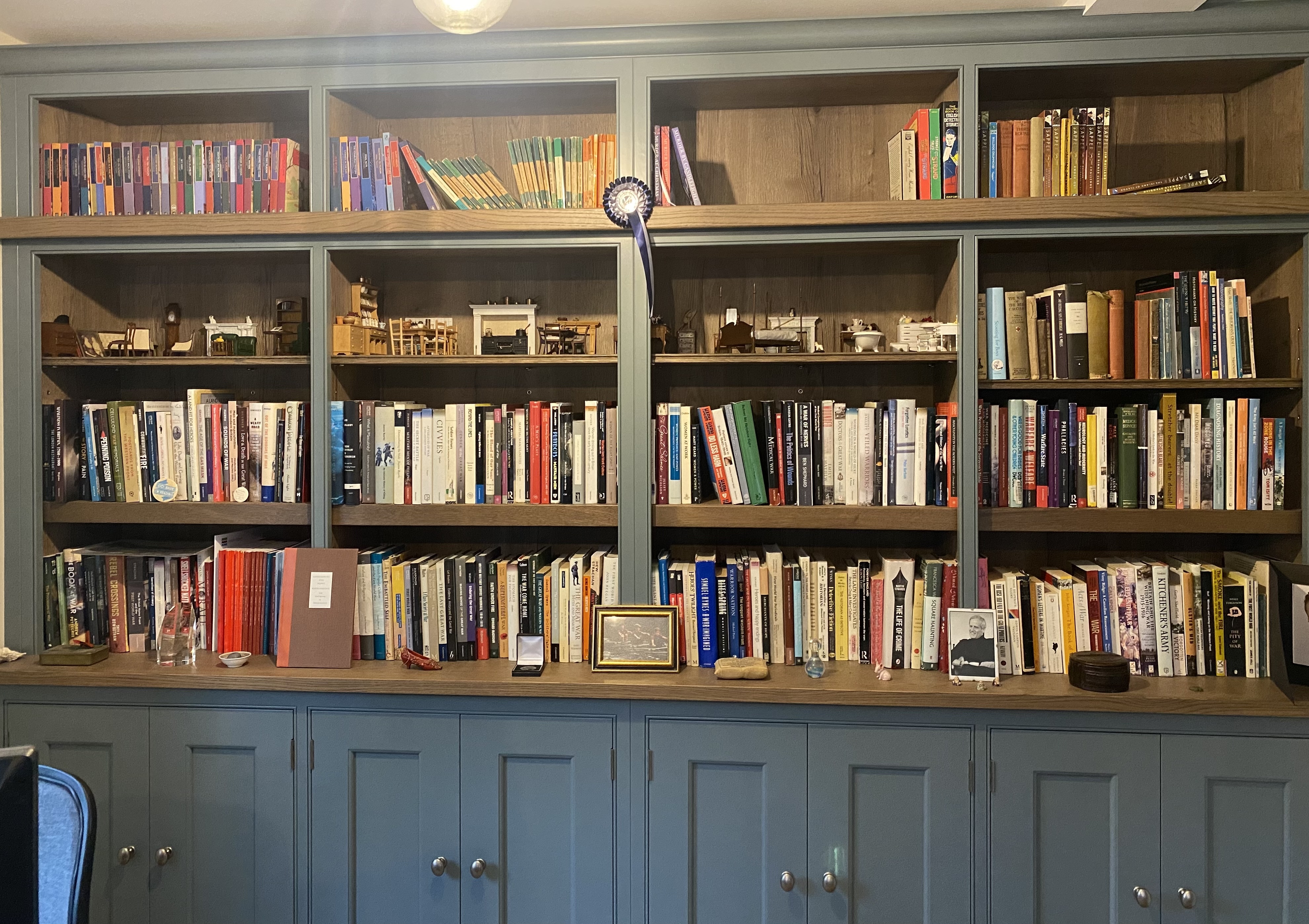
The number of ways in which my mother’s memory was evoked that day may have been rather more intense than usual, but the fact is that, that I am reminded of her  on an almost daily basis, even nearly seven and a half years after her death. I use her sewing scissors and cooking equipment. Some of her (many, many) books are now displayed on my bookshelves. I wear her earrings when I dress for professional speaking engagements in the hopes they will endow me with some of her skill in holding a classroom.

Her memory shapes other aspects of my professional life as well. Matt’s book is not the only work of history that I have read through the prism of my mother’s research into the complexities of the Gluckstein family, of which we are descendants. My responses to Laura King’s and Michael Roper’s books on the methodological importance of family histories have also been informed by her interest and the archive that she left me. Even more, my sense of myself as an academic has been shaped by the fact that my mother was, for many years, a teacher, and a very good one. Of the three main roles that 21st century academics are expected to undertake – research, administration and teaching – the last has always been the one I have had most difficulty embracing. While for many it is the primary role of a university lecturers, one which energises them and inspires their scholarship, for me it often feels like a duty that I will never be able to bear lightly or with grace. As a result, I don’t believe that I will ever have the skill, the creativity or the passion to inspire students as a truly great teacher (and I have had a few in my time) can. In short, I will never be as good at it as my mother was.

Why am I posting this now? Because, as of today, for the next eighteen months, I am in a position to be able to slough off the anxiety of never quite living up to my mother as a teacher as I attempt to fulfil the other ambition that we shared, to write full time. I am taking a sabbatical from Leeds to finish writing my next two books, a history of masculinity and warfare from 1750 to 2000 in global perspective, under contract with Polity Press, and a history of the social and cultural impact of First World War ex-servicemen on 20th century Britain, the book I have been trying to complete since the Men, Women and Care project ended in 2020. (It really is almost there; I have a central thesis and, I think, the right tone for a project that will be something more than an academic monograph).

But what I have realised in the past week, picking through the emotions arising from the reminders of my mother and her loss, as well as the fears that have surfaced as this change in circumstances grew ever closer, is that there are lots of other things I want to write as well – the history of Golden Age detective fiction and the world wars that has haunted me since I wrote my Phd thesis, a work of fiction that has been coming together, in fits and starts for nearly as long and, it turns out to my surprise, my take as a social and cultural historian of early twentieth century Britain on my family history. This last has been sparked in part by The Song of Seven Dials, which places Lyon’s in the context of the modernisation of London in ways which suggest further exploration of its creation as the family business of a complex family of Jewish immigrants could prove worthwhile, as well as by a request for information from my playwright cousin which prompted speculative questions about name changes by my ancestors. So yes, I might be ready to unpack the boxes in the office that are my mother’s archive and pick up the task of writing about her family which she never managed to complete herself.

I plan to reflect on my writing to some extent on social media (these days Bluesky rather than the site formerly known as Twitter), but not everything, particularly the family history, is suitable either for traditional publication or dissemination as a social media thread. All of which is a very long-winded way of saying that I will, once again, be reviving this blog as a space of record and reflection both on subject and process. Having tried to lay the groundwork for some effective writing habits through the semester of research leave I enjoyed at the end of 2025, I will use this space to keep me disciplined about writing something every day, as well as for exploring ideas as they emerge.

I hope you will join me as I shift gears and possibly course in this latest stage in my career as a historian and in the life of this blog.