Second-hand Goods

Caroline Dunford, A Death in the Hospital

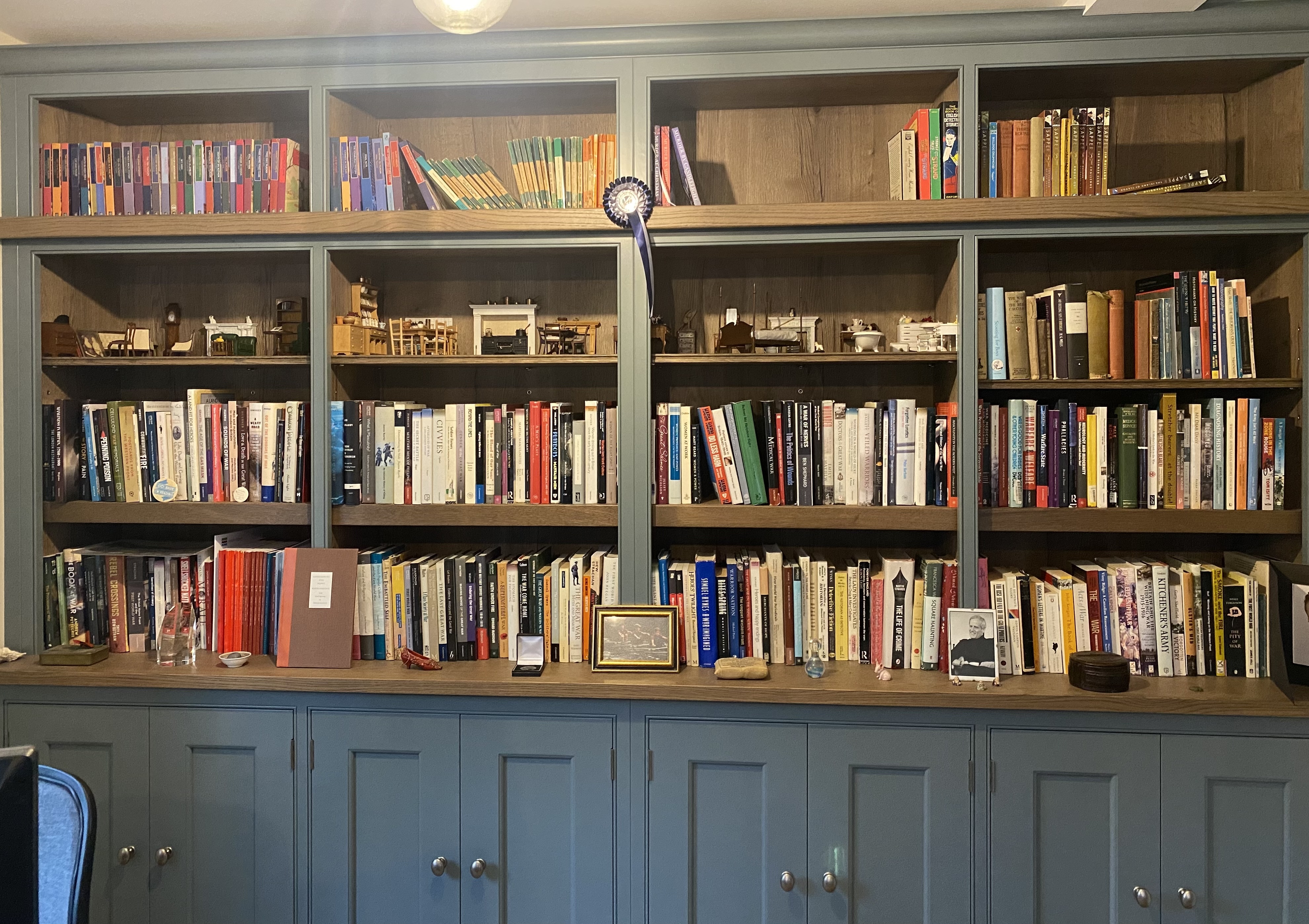
I have a very bad habit of picking up any novel with a First World War or immediate post-war setting when I come across them in a second-hand book sale. My husband grumbles about my bringing yet more books into the house while, in my heart of hearts, I know that, more likely than not, I will spend most of the time I am reading them getting annoyed by inauthentic, not to say inaccurate, portrayals of the war which rely heavily on clichés. Yet I carry on doing it, in part in forlorn hope that I may encounter an original (and thus enjoyable) new author or series, and in part to remind myself of all the pitfalls to avoid when writing my own war-set fictions.

As painful as most of these are to read, in general I find there is enough to them, in terms of plot, characterisation or, very occasionally, setting, to keep me reading until the final pages. Certainly, I did manage to do this with Carola Dunn’s Die Laughing, in spite of its many short comings, and with Sulari Gentil’s A Few Right Thinking Men, which erred to much towards the thriller side of crime fiction for my taste, as including random fictional press clippings in a way that I found deeply confusing and off-putting. However, this cannot be said for my most recent acquisition, Caroline Dunford’s A Death in the Hospital (2020), which I picked up for 50 p. at our local National Trust property second-hand bookstall and which I abandoned about a quarter of the way through.

I had been vaguely hopeful about this novel, the 15th book in the Euphemia Martin series, which appears to still be going strong, with A Death at Christmas due out this year. After all, the war hospital setting was right up my street in terms of areas of historical interest, although this did risk a more than usual number of snorts at clichés about VADs and misuse of the term ‘field hospital’. What I didn’t expect, however, was a historical setting so inaccurate as to suggest that Dunford is not even familiar with Vera Brittain’s Testament of Youth, let alone any less ubiquitous representation of the British military medical services in the war. It was at the point where a hospital where the central character had gone undercover as a trainee nurse (not, apparently a VAD, although it remained entirely unclear what the character who made this distinction thought a VAD role entailed) was described as the first hospital of its type ‘since the Boer War or possibly the Crimean War’ that I gave up entirely. For the setting to have any meaning or interest, I did need to have evidence of some basic plausibility for the institution that formed that setting, including the awareness that the auxiliary hospital (which I think was what this one was supposed to be) was only one type of medical institution in Britain during the war. As well as the permanent military hospitals which treated the Regular army throughout the second half of the 19th and into the 20th century, at the outbreak of war, military hospitals were rapidly set up across Britain, usually in commandeered institutions. Where country houses were donated, these became auxiliary units, specialising in rehabilitation after initial treatment at a general hospital. The institution in A Death in the Hospital did not seem like any of these.

Which brings me to the second aspect that precluded my enjoyment of this book. In addition to the ahistorical setting, the question of timing made any suspension of disbelief I might have had impossible. The novel is, apparently, set in August 1914. Even if we assume that the book starts at the end of the month, in at most three weeks there has, apparently, been time for some sort of voluntary hospital to be set up and filled with wounded servicemen including at least one volunteer servicemen, although he just may have been a Territorial. It is also strongly implied that the military effort had achieved statis along the Western Front, although this wasn’t the case until the winter of 1914. In other words, the author attempts to invoke the war as historical context through clichés that ignore the somewhat atypical reality of the opening months of the war. This sort of telescoping of events is not just bad writing, it is terrible history.

I do like to think that I have a pretty high tolerance for inauthenticity in genre fiction set in the First World War, of which there is a remarkable amount. Yes, as I say, I do grumble about inappropriate uses of terms like ‘field hospital’ and conscientious objector, or assumptions about the incidence and understanding of executions and shellshock. But while reiterating worn tropes is boring and, for a historian, frustrating, I am aware that I bring a level of specialist knowledge to reading this type of fiction which gives me an unfair perspective. Where there is some evidence of basic historical research, some attempt to get to grips with the historic specificity of the world being depicted, I can usually suspend enough disbelief to at least finish the book. Here there was no evidence of any historicization, with events, ideas and innovations from at least three major conflicts mashed together in an ahistorical mess labelled ‘The First World War’ in a completely implausible time frame. It is the sort of historical fiction that makes me wish there were a way to certify an author’s credentials as a historical research before they are allowed to publish. Indeed, the only excuse for this sort of book, in my view, is the case it makes through absence for history, including that which informs creative products (films, television, art and games as well as literature) as an intellectual discipline that requires skill and rigour, not just a vague idea that the past is another country which might make for a romantic setting.

So A Death in the Hospital will return to the second-hand book sale table via my local charity shop, where I should clearly have left it in the first place.

Publicity

A couple of publicity (self and otherwise) notices.

The University of Leeds Legacies of War seminar series is delighted to announce that Professor Adrian Gregory will be giving the first paper of the new term on Thursday, 7th February at 5:00 in Michael Sadler Room 3.11.  He will be speaking on the topic of ‘Did God Survive the Somme?’  All are welcome.

Adrian GregoryMy review of Leo van Bergen’s Before My Helpless Sight: Suffering, Dying and Military Medicine on the Western Front, 1914-1918 appears in the latest edition of First World War Studies which also includes several interesting-looking articles.  I should be reading about the establishment of the Territorial Army in Britain, but I think I may take break and read about Old Etonians, demographics and eugenics instead, courtesy of Richard Carr and Bradley W. Hart.

Why Am I Here?

A couple of recent comments, both on here and via e-mail, have caused me to start thinking a bit more seriously about the point of this blog. Over the past few months I have commented fairly extensively on manifestations of First World War history in the wider culture and a bit less on my own particular field of research. What was originally intended as a space for me to work out ideas relating to the history of non-commissioned members of the RAMC during the war has become a rather more general First World War blog.

I have to admit, this makes me a bit nervous. There are an awful lot of First World War buffs (in the most general sense of those interested in the war, not just pure military history obsessives) out there, and this blog is never going to be able to cater for all interests and I won’t even begin to try. I worry, however, that I spend an awful lot of time defining myself negatively as a historian. I am NOT a military historian (although I do know an increasing amount of military history as I get to grips with the complex systems of evacuation employed by the RAMC during the war). I CANNOT identify specific uniforms not am I likely to be able to help with queries about genealogical research (although I may be able to point people in the right direction). I am NOT a transnationalist and my knowledge of the non-British experience of the war is woeful, although I am hoping this will change in the not-to-distant future.

So where do all these negatives leave Arms and the Medical Man? Well, there are still plenty of positives, I hope.  I AM a cultural historian of warfare. I DO know a great deal about popular literature and the war, and an increasing amount about the medical history of the war.  I AM a gender historian which helps me locate my studies of the war in the narrative of the nineteenth and twentieth centuries.

I still hope to use it as a space to work out my ideas, especially now that I am starting to have more primary material to work with. I am in the Wellcome archive this week, discovering just how little there is on the work of the nursing orderly, something I am going to have to think hard about as I am due to give a paper on that very subject in two months time. And, as the centenary gets ever closer, I will carry on discussing representations of the war in British popular culture. That aspect of this blog has been the source of the greatest amount and potentially the most fruitful discussion so far. And while creating a forum for discussion about the war was not necessarily my main purpose in starting out with this blog, if that is a role that it fills (in a civilized manner, naturally) then far be it from me to resist!

On which note, here is an article that was doing the rounds last week, in case you haven’t seen it. Encouraging to have the problems of commemoration voiced by such an authoritative source, although I am not sure where we go from here. More discussion, then.