I was planning to write my next blog post about popular histories of returning British ex-servicemen, comparing Adam Powell’s Soldiering On and Simon Fowler and Daniel Weinbren’s Now the War is Over. At some point I will write this post, as there is a lot I want to say about the multiplicity of such books, what makes a book on a historical topic a ‘history’ and the challenges I am facing in trying to write The Return of the Soldier as something other than an academic monograph.
But…
Last week my husband was rushed into hospital. Since then, he has spent two days on the ICU in an induced coma and, while he is now conscious and on a ward, he is still very ill and will be in hospital for the foreseeable future.
It has, as you might imagine, been a surreal and often terrifying week for me and our two children. All our networks – family, neighbours, school friends, university friends, colleagues, the children’s choir – have mobilised to support us. People have offered to fly across the world to come to our aid. A network of medical professionals stretching from New Zealand to Colorado have been on call to provide expert advice at any hour of the day or night. We have been fed cheese and chocolate and tea, offered beds for night, provided with distractions, hugs and words of support.
We try, as far as possible, to carry on as normal in the knowledge that the NHS, always at its best in a crisis, is doing its utmost and keeping our husband and father safe. My son has spent three nights under canvas in the rain-sodden Lakes, doing his Duke of Edinburgh Gold practice expedition. My daughter has baked Mini Egg cookies. Piano has and will be played, hymns and anthems sung in Holy Week services. Life around us goes on, so it must, at some level, for us as well. I cannot let this derail my son’s aspirations for university, my daughter’s vital friendship groups.
But…
While I continue to survive and function at some level day to day, doing laundry, cleaning the house, organising the children so that they are where they need to be right now, ensuring that the hens are alive and well cared for, as far as work is concerned, I find myself in a place of suspended animation. With a few exceptions, all of which can remain in abeyance for the next few weeks, I have requested extensions for all project deadlines. My sample chapter of The Return of the Soldier and my messy first draft of the first chapter of Men and War remain half typed and three-quarters written respectively. Alwyn Turner’s A Shell-Shocked Nation, the next on my reading list, remains unread. I will get back to this work soon; there is part of me that is desperate to do so, to think about something beyond my own and my family’s immediate survival. But for the moment, all of this must wait.
As difficult as this week has been, its saving grace has been the knowledge it has brought me of how lucky I am. Six or seven years ago, three acquaintances of my generation lost their male partners within a twelve-month period, two to suicide, one to sudden illness. All had young children; all faced the challenges of a future shaped by profound loss with a grace and resilience I can only aspire to knowing that, however ill he is, my husband is alive and that is a gift.
So too is my children’s resilience and maturity in the face of this crisis. I would not have chosen to have the fact that my husband and I have managed to be ‘good enough’ parents demonstrated to me in this manner, but given that it has been, I am glad it is the case.
And as for those networks, that web of supportive relationships that is our safety net in the moment of freefall, the only words I have are not mine, but those of Dar Williams: ‘I’ll act like I have faith, and like that faith never ends/ But I really just have friends.’
There will be more blog posts in the near future. Writing this post has shown me that writing is going to help me to survive. In the meantime, we go on.
In my last post, I spent quite a lot of time thinking about the word ‘intimacy’ as use by Matt Houlbrook in Songs of Seven Dials, and how this use might apply to one of my own current projects. In this post, I want to focus on another word that Houlbrook uses, namely ‘cosmopolitan’, this time not in relation to anything I am currently writing, but rather in relation to a piece of historical work that I am still, largely, trying to avoid.
Houlbrook uses ‘cosmopolitan’ frequently to describe the population of Seven Dials. By applying it to this working-class neighbourhood in place of the perhaps more easily parsed ‘diverse’, Houlbrook highlights a central element of his argument about the racial makeup of the area as exemplified by one of his protagonists, Jim Kitten. Kitten, originally from Sierra Leone, was, as Houlbrook notes on a number of occasions, both Black and a British imperial subject. This duality appears to have been common among the denizens of the Kittens’ café, as well as some of the legal team who helped bring their libel case.
In demonstrating how Seven Dials was, however briefly, a ‘Black Colony’, in which interracial marriage and trans-imperial sociability were both accepted facts of daily life, Houlbrook offers an important corrective to the dominant image of Britain in general and London in particular in the 1920s and 1930s as white. Imperial migration in the period meant that any major city in Britain had its share of non-white residents seeking to make successful lives, including regular work, domestic security and the enjoyment of leisure. While the story Houlbrook tells is one of dreams thwarted by vested commercial interests, problematic local politics and a vituperative press, his depiction of the Kittens’ café points to the ways in which these aspirations were as important to the shaping of British society and culture in the first half of the twentieth century as the political rise of a self-made Yorkshireman like Bracewell Smith or the avant-garde experiments of the Cave club.
However, in the period that is Houlbrook’s focus, cosmopolitanism was about more than diversity of skin colour and class. It was also a term of disparagement, one with implicitly antisemitic overtones. It was used in popular culture to signify a rootlessness defined by the figure of ‘the Jew’, whose loyalty was deemed to lie with their co-religionists, rather than then nation. The Jewish capitalist with ‘no conscience and no fatherland’, [1] as evoked by John Buchan in The Thirty-Nine Steps, haunted the imagination of the 1920s and 1930s and shaped the politics of antisemites such as Sir William Joynson-Hicks, who served as Home Secretary from 1924 to 1929. Joynson-Hicks’ policies on migration were, as George Monbiot has recently pointed out, were designed to exclude Jewish refugees who, he believed, ‘put their Jewish or foreign nationality before their English nationality’.
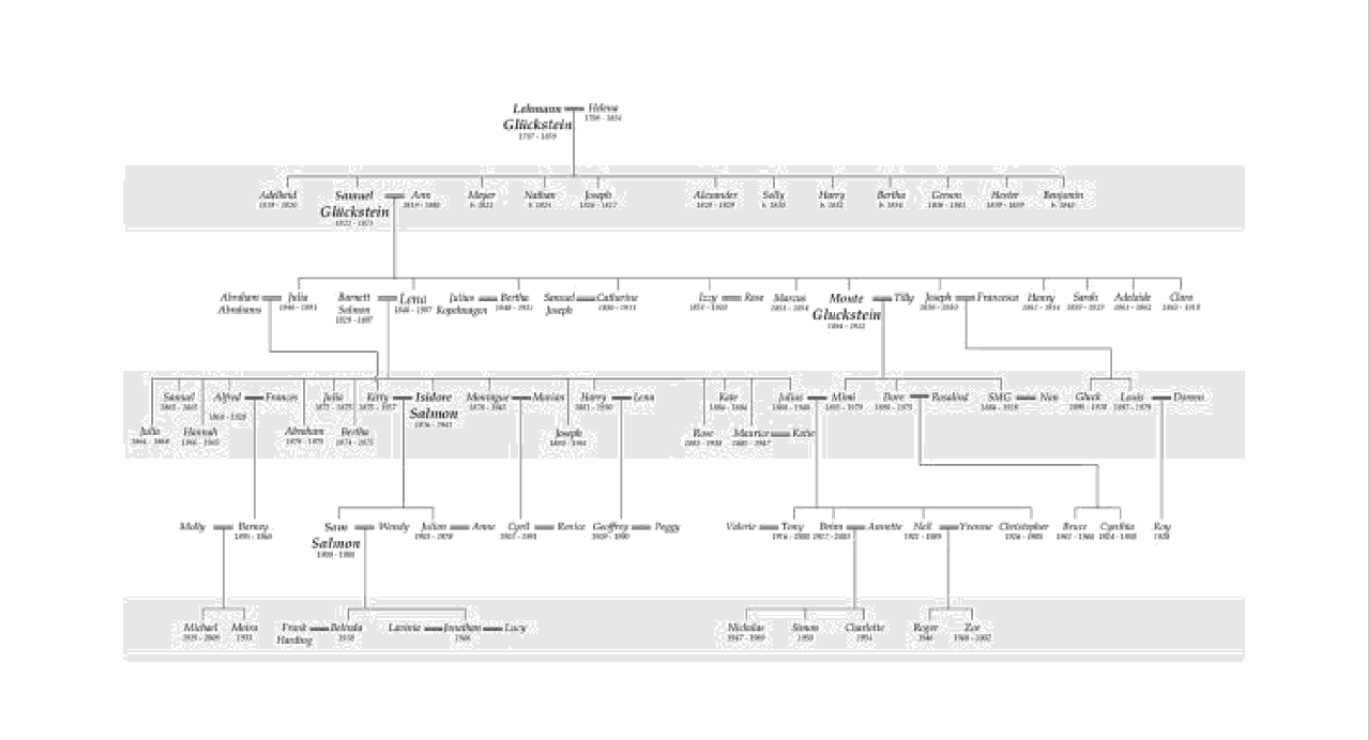
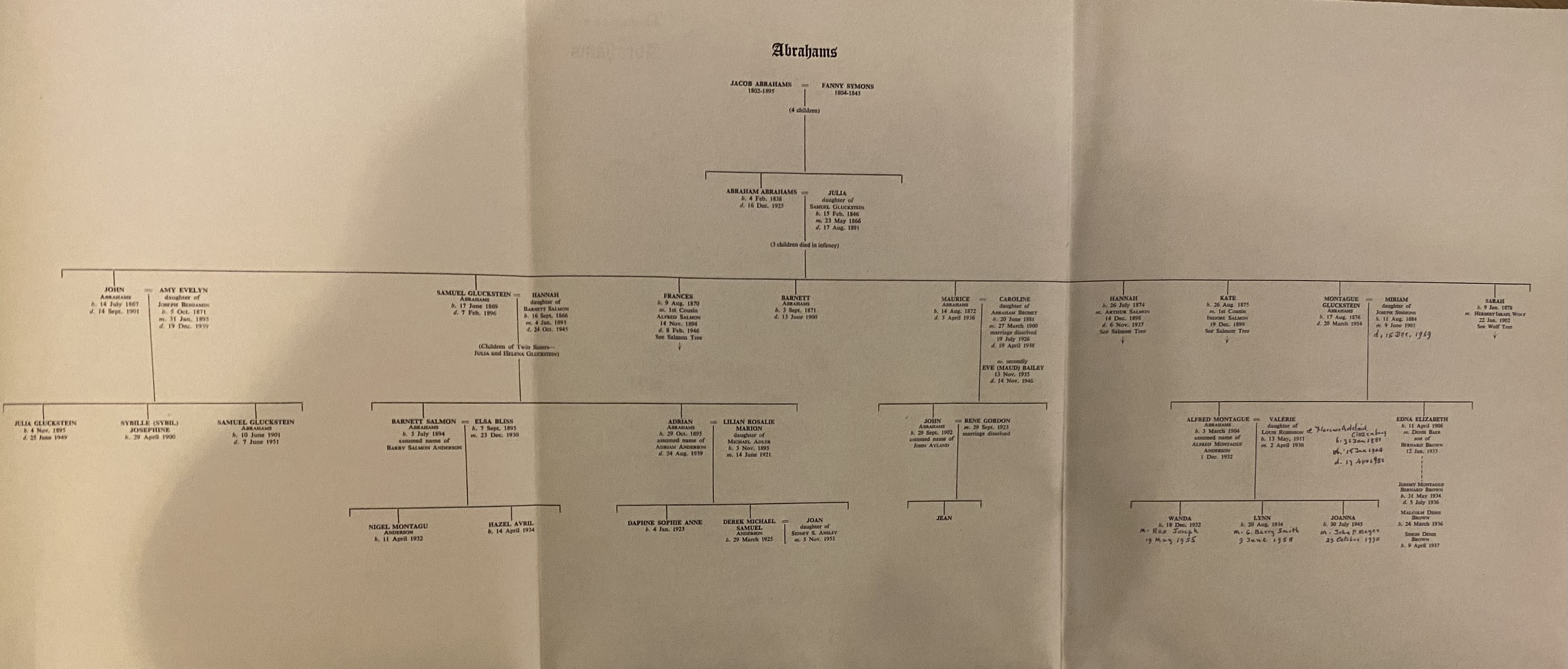
Which brings me, in a rather roundabout way, to the history of my own family. Because, like Monbiot, I am a descendant of Samuel and Anne Glückstein, whose son Monte and son-in-law Barnett Salmon, founded Lyons & Co. in 1887. And Jim Kitten worked, at least for a short period, at Cadby Hall, the four-hectare complex that formed the company’s headquarters in Hammersmith, where baked goods were made overnight to be shipped out in liveried trucks across the city. Houlbrook uses this association to set the Kittens’ café in counterpoint to Lyons Corner House, the most visible symbol of a firm that, in the first half of the twentieth century, ‘was woven into the fabric of British life’.[2] He describes Lyons’ teashops as ‘resolutely middlebrow’, ‘exemplify[ing] an increasingly demotic culture of dining out’ but still ‘underpinned by the unseen labour of a cosmopolitan workforce’. (20-21) All of which is undoubtedly true, but rather overlooks the history of Lyons’ itself as an business founded by those who might be considered members of that cosmopolitan workforce, not so very different from the ‘Italian, Belgian, Greek or Jewish entrepreneurs’ who set up shops and eating-houses in Seven Dials to provide for the area’s residence.(30) They were, after all, also migrants from overseas, looking to find stability and a better life in London. Lehmann Glückstein, Samuel’s father, was born in Jever in what is now north Germany; Samuel in Rheinberg, near the border with the Netherlands. The family arrived in London in 1843, via the Netherlands and Belgium, fleeing religious persecution, debt and accusations of fraud. Initially establishing themselves in Whitechapel, then ‘fast becoming a Jewish ghetto’ [3] and with a reputation for poverty and crime not unlike that of Seven Dials, it would be another half century before the first tea shop opened, on the back of a successful sweetshop and tobacconist business.
For me, these similarities between the Kittens and the Glücksteins raises complex and sometimes uncomfortable questions about how and why one family were able to succeed in their entrepreneurial efforts where the other ultimately failed. Because succeed the Glücksteins did, amassing business empire that, at its height, included the Strand Palace Hotel, the Trocadero and the Wimpy Bar chain, as well as the Lyons’ tea shops and food brand. Today the descendants of Lehmann and his wife Helena include chefs and television personalities, lawyers, bankers, journalists, artists, playwrights, doctors, entrepreneurs and at least two historians. The family’s success both derives from and reflects integration with British culture and identity, even as the many in the family held on to their Jewish faith. As Thomas Harding notes of descendants he spoke to when research his history of the family, ‘they all came across as confident, secure and possessing a profound sense of belonging.’ (my emphasis) [4].
Integration was important to the Glucksteins (as they became) because, unlike Jim Kitten, they arrived in Britain as migrants without claim to a British imperial identity. Samuel, the family’s vanguard, spoke no English and had no service to the British state in a world war to present as credentials for acceptance. Their claim to a sense of Britishness was far more fragile and needed to be constructed in large part through a corporate identity that deliberately adopted the name of its junior partner because it did not sound Jewish or German. Jim and Emily Kitten’s business, by comparison, appears to have been able to define itself as a meeting place for the Black community in Seven Dials because the Kittens felt able to lay claim to a British identity separate from their work, Jim through imperial subjecthood, Emily as a white native. Their decision to challenge John Bull in court over its characterisation of their café as a criminal hub suggests not simply an unwillingness but an outright refusal to mask their identity as a Black business for commercial ends.
At one level, it might seem simply a matter of racism that ensured the success of one and the failure of another. The Glucksteins could mask their origins and present as white Europeans in a way that Kitten could not. Yet antisemitic prejudice in Britain throughout this period was as vicious as anti-Black racism in this period. Comparing Lyons and Co. and the Kittens’ café brings to the fore the extent to which choices about whether to accommodate or resist prejudice played a role. Such choices, I would argue, were conditioned by the extent to which the Glucksteins and the Kittens felt themselves to be British. This in turn suggests that the barriers to success in the British imperial context of the early twentieth century were more complicated than simply a question of skin colour.
There is also question of timing and economics. There were more opportunities available to economic migrants in the nineteenth century than in the leaner years after the First World War, although the ease of movement of people increased in the later period. Whatever the reason for the different outcomes for the businesses, what struck me reading Songs of Seven Dials is the ways in which the Kittens’ café and Lyons are not simply examples of social hierarchy in London hospitality of the 1920s and ‘30s, but rather two sides of a coin. Both are stories of migrants using the sociability of hospitality to anchor themselves in the metropole. Both are stories of the negotiation of prejudice, not necessarily successfully. Above all, both are stories of what it meant to be British in the 19th and 20th centuries, who belonged, in what spaces and on what terms.
This last is, of course, a central question motivating Houlbrook’s work in Songs of Seven Dials. Bringing the Kittens’ café more directly into conversation with Lyons’ has the potential, I think, to push his arguments beyond the boundaries of the district, or even London, and to think more granularly about the definitions of the ‘Black Colony’ as part of a modern cosmopolitan culture. It also, of course, has the potential to speak, as Houlbrook suggests, to questions – about migration and belonging, sociability and identity – that are central to contemporary political debates.
I am still resisting getting drawn into more work relating to my family history, mainly because I already have too many projects on the go. But reading Songs of Seven Dials has given me all sorts of ideas about the social significance of that history and directions I might take any future research. In other words, it is a book that made me think and will, I predict, continue to do so for a long time to come.
[1] John Buchan, The Thirty-Nine Steps (Richmond, Surrey: Alma Classics, 2017; first published Edinburgh: William Blackwood and Sons, 1915), p.10
[2] Thomas Harding, Legacy: One Family, a Cup of Tea, and the Company That Took on the World (London: William Heinemann, 2019), p.xxi.
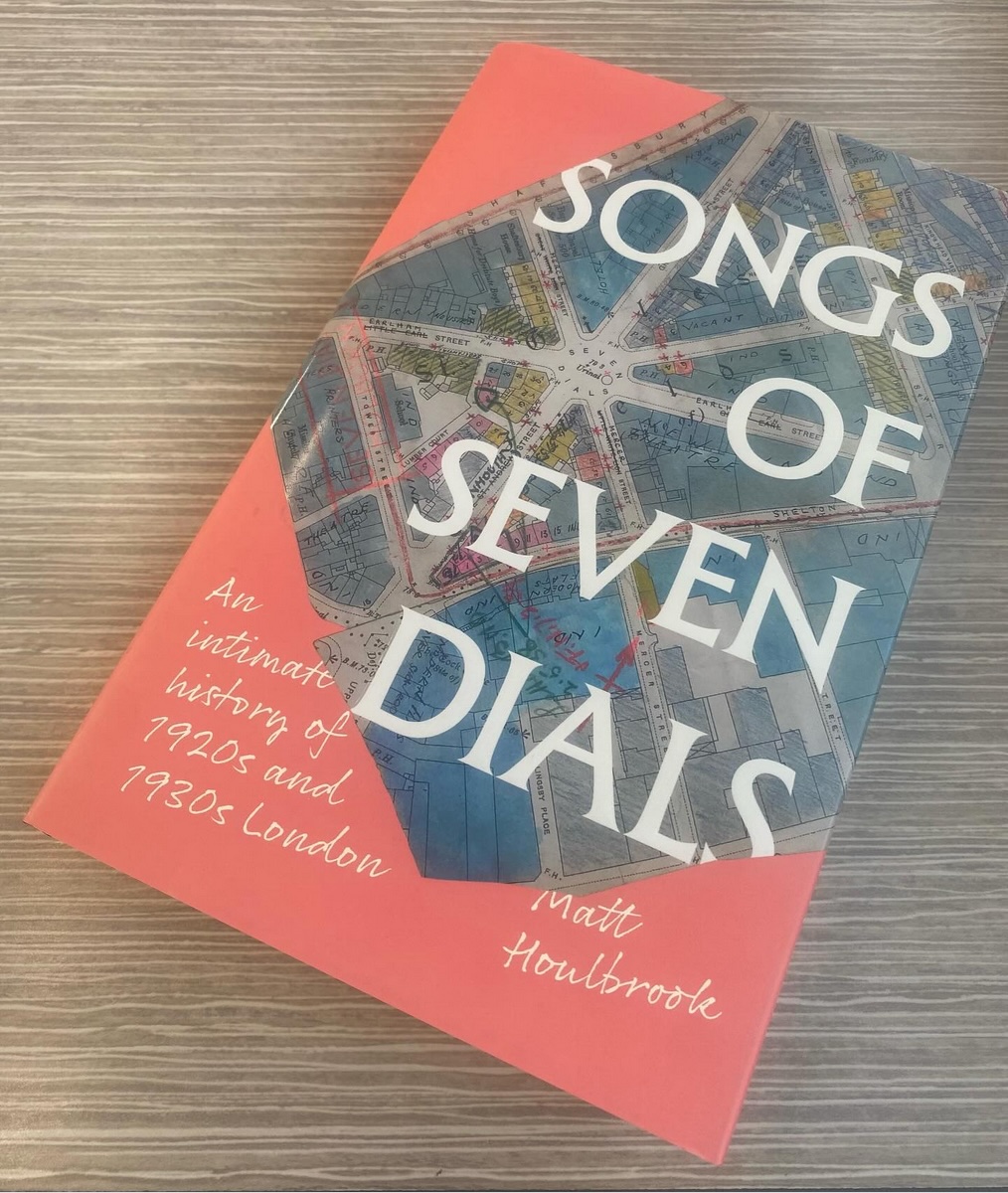
This review has taken me a while to write. Matt Houlbrook’s Songs of Seven Dials: An intimate history of 1920s and 1930s Londonturns out to be so rich that I have had to split my responses to it into two posts. This first post will be a slightly more formal review alongside a discussion of the ways in which the book is shaping my thinking about The Return of the Soldier, my own tilt at a broad social and cultural history of the legacy of the First World War in Britain. The second, which I will publish in the next couple of weeks, half term permitting, will focus on how the book intersects with my own family history.
In Songs of Seven Dials, Matt Houlbrook sets out to write a social and cultural history of the tiny neighbourhood of Seven Dials which lies between Shaftsbury Avenue, Charing Cross Road and Covent Garden produce market. Originally defined as a neighbourhood in the seventeenth century, Houlbrook focusses on this ‘shabby cosmopolitan working-class neighbourhood’ (p.3) in the 1920s and ‘30s, a period in which the area was represented as, variously, a crime-ridden slum, London’s ‘Black Colony’, an artistic Bohemia and an opportunity ripe for commercial development. Subtitled an intimate history, the book attempts to focus on the lives of those who actually lived in Seven Dials, alongside those who attempted to impose their social, cultural or economic vision on the area from the outside. Unfortunately, this only has mixed success. The voices of the latter tend to be much louder in the archives than those of the former, and the extensive naming of names can’t always balance the narrative in favour of the historically marginalised who called Seven Dials their home. Even the use of the historic present, which allows Houlbrook to tell the story of Jim and Emily Kitten’s libel case against John Bull with some immediacy, can only go so far in bringing the names of other Seven Dials residents to life, and, at least for this reader, too often got between me and the story being told.
The other stylistic technique that Houlbrook uses to support his analysis is the structure of the book through seven chapters, each one focussing on one or two of the streets radiating out from the central square which make up the district. This structure both emphasise the microhistorical approach that Houlbrook takes to the subject, as well as allowing him to employ circular imagery as a metaphor across the volume as whole. While this is generally an effective strategy, the inclusion of Long Acre and the Strand in chapter four disrupts the pattern in problematic ways. Both these streets, chosen to represent the locations of the press and legal system that imposed an external narrative on Seven Dials through the Kittens’ libel trial, are not only outside the district itself, but aren’t even accessed directly by Shorts Gardens (Chapter 3) or Great Earl Street (Chapter 5). Subject-wise, the location of the chapter is equally confusing. Houlbrook begins his introduction with the statement ‘It starts with a libel trial, held over three days in the High Court of Justice in February 1927.’ (p.1) Yet it isn’t until Chapter 4 that the reader is given the story of the trial itself, making the background detail of the actors given in the preceding chapters somewhat hard to follow, not least because, while there is a very rough chronology at work, Houlbrook moves back and forth not only across the two decades between 1919 and 1939, but as far back as the 1890s and as far forward as the 1960s.
A key point that this chronological muddying underpins is that the ‘modernisation’ of London, so often associated with the 1920s and 1930s, was far from a tidy linear progress. Grand modernist visions, both economic and architectural, failed. Nostalgia for an imagined past and old stereotypes were evoked to dismantle progressive trends towards diversity and anti-colonialism. At the same time, ‘the foundations of the what would be called gentrification were laid in the 1920s and 1930s, when politicians, planners, and entrepreneurs tried and failed to raze Seve Dials an build a new city from the ground up.’ (p.12) The making of modern London was, as most history is, far more messy than all-too-often romanticised visions of the ‘interwar’ would suggest. Houlbrook makes a powerful case for the need to think about this period as more than just the clichés of ‘The Roaring Twenties’, ‘The Hungry Thirties’, ‘The Interwar’. Yet in titling this story as one primarily about the 1920s and 1930s, contradictions start to emerge. Whatever Houlbrook’s intentions, this categorisation marks the period as ‘a kind of caesura – space between, a time apart’ (p.10), implicitly reinforcing the First World War as a historic paradigm shift in the creation of modernity. At the same time, the war itself is only a tiny part of the story that Houlbrook is telling. Jim Kitten’s wartime internment at Ruhleben and the gunshot wound to his arm he received there echoed through his life and may even have contributed to his death in 1940 (p.230), but they are less important to the story of the years between than his place of birth in Sierra Leone, his marriage to a white Englishwoman and his work as a café owner.
This question of periodisation and the way in which historians use time spans to organise and contain their arguments, particularly as it relates to the early twentieth century, are central to my own thinking about the arguments I am making in The Return of the Soldier. The historiographic tendency to position the years between 1914 and 1918 as not simply a time apart but as a paradigm shift – the end of the long 19th century, the birth of the modern era – has been something that I have tried to resist in all the histories that I have written. Almost without exception, the men that I wrote about in my first two books were born in the 19th century. The same is true of the men who are the subjects of The Return of the Soldier. They survived the war and went on to live and work throughout the twentieth century. On the one hand, there is a story of social and cultural continuity to be told through these survivals. On the other hand, the very premise of the book is based on these men’s status as having served in the war. The war years were undoubtedly significant in shaping men’s lives and, as a total war, the lives of those who made up the society in which they lived. Bodies and minds were altered by the experiences lived through during the war – by wounds and illness, by separation and deprivation, by unanticipated opportunities for travel and work. The story of social and cultural discontinuity that emerges is a powerful one. How to explore the nature and meaning of the ruptures that war created without isolating the years between 1914 and 1919 as a time apart or the sole defining event in the lives of those who lived through it is the challenge I have been wrestling with since I first began trying to shape my research into a coherent argument. If individuals lived their lives across the temporal boundaries historians attempt to impose, writing histories that do honour to those lives, and which, as is Houlbrook’s ambition, inform our present, forces us to rethink comforting historic periodisations.
My way of addressing this problem has been to rethink the subtitle of The Return of the Soldier as ‘British First World War Ex-Servicemen and the Making of the Twentieth Century’. The intention is to focus on a discussion of continuity and discontinuity in which the war plays a defining but not an exclusive role, and on the particularity of the lives of these men and those around them, rather than the more abstract categories of ‘the war’, ‘demobilization’ and ‘legacy’. The previous subtitle, ‘The Intimate History of Demobilization in Britain After the First World War’ tried to make this point by invoking the concept of ‘the intimate’, an idea that Houlbrook also uses in his subtitle. Yet I soon discovered that the intimate is a slippery historical category. For Bruno Cabanes it is the study of ‘the relationship of individuals to their own body, to their familiar haunts, and to their family and friends’[1], combining the history of the body with the history of the domestic, an approach exemplified in Joanna Bourke’s Dismembering the Male. Yet Bourke, in her own An Intimate History of Killing, uses the term to indicate as study of subjectivities, the intimacy that of the individual psyche. [2]
In Songs of Seven Dials, intimacy appears to be two-fold. On the one hand, in support of his argument that Seven Dials in the 1920s and 30s was a place of residence and work rather than simply the opportunity for improvement, development or entertainment that many imagined and represented it as, Houlbrook peoples his history with named individuals, located in specific places of residence and types of work. This is the intimacy of the reader with the specific historical actors. It is enabled by the digitization of the 1911 and 1921 census records, which Houlbrook uses, alongside local newspaper records, to great effect. The problem is that the level of intimacy achieved remains limited. While Houlbrook can give names and occupations to the residents of Seven Dials, these records don’t give deeper insight into their lives. Naming is, of course, vital to the process of remembering, but the only way that Houlbrook can give us more than government records offer in relation to people about whom there are few reflexive records is through speculation. He does this with care, and it is here that the historic present is most effective, but it remains speculation nonetheless. Like the tense, I found it got between me and the story being told, making it more distant rather than more intimate.
Where Houlbrook does convince with his claims to writing an intimate history is through the physical intimacy he evokes. Even without reliable images of many of the places he writes about, he conjures the cramped, noisy, sometimes squalid, always vivid nature of the streets, houses and businesses that make up this tiny pocket of London. As becomes clear in the conclusion, these are streets that Houlbrook has walked himself many times as he sought to understand how it transformed from a place ill-repute to the gentrified site of up-market commerce that it is today. It is the place, not the people, which makes this history feel intimate, pointing to the many forms of intimacy that the historian might seek to explore.
This multiplicity in meanings of the intimate is important for my thinking about ex-servicemen’s return for at least one chapter of The Return of the Soldier. ‘Returning Home’, which I am currently working up into my sample chapter for agents and publishers, is divided into two sections, ‘People’ and ‘Places’. Thinking of each as facets of an intimate historical appraoch is proving extremely helpful for working out how the chapter functions as a whole and what sort of evidence I need to support my argument about the long-term significance of ex-service return. At the same time, it is helping me to understand that some of my other chapters may not be intimate histories. Trying to force the ‘Returning to Work’ chapter into this conceptual box may be why I have been struggling so hard to make it work for so long.
So I return to the redrafting process with a new sense of direction having read Songs of Seven Dials. But first I need to grapple with the relationship between Houlbrook’s text and my own family’s history, a question which has been haunting me almost since I first picked up the book and which will form the subject of my next post.
[1] Bruno Cabanes, ‘Negotiating Intimacy in the Shadow of War (France, 1914-1920s)’, French Politics, Culture & Society 31(1): Spring 2013, 13.
[2] Joanna Bourke, Dismembering the Male: Men’s Bodies, Britain and the Great War (London: Reaktion Books, 1996); Joanna Bourke, An Intimate History of Killing: Face-to-Face Killing in Twentieth-Century Warfare (London: Granta Books, 1999).
It has taken a week, but I have finally unpacked all the boxes of books and papers and accumulated office accessories that I acquired over 15 years at Leeds. So now that I am fully installed in my home office, it seemed like a good time to enumerate the projects I have underway and planned, and what I hope to acheive in the next 18 months.
Men of War: A Modern History
Under contract with Polity Press, with the manuscript due in 2028, I currently have aproximately 10,000 words of a very, very messy draft of Chapter One and a detailed outline of all eight chapters. The goal is to have a completed first draft by the end of the calendar year. I anticipate this being a complete mess, with the aim of a serious edit the following year.
The Return of the Soldier: British First World War Veterans and the Making of Twentieth Century Britain
This one is now on is fourth or possibly fifth subtitle as my ideas have shifted through the drafting process. I currently have between 3,000 and 5,000 words drafted for three of the five chapters, with a plan for a conference paper for the fourth chapter in the works. These will then form the cores around which I will build the longer chapter, with a full draft of ‘Return Home’ next on the agenda so that I can send it out to publishers and agents for consideration. The goal is to have a contract for this one by the end of the year.
The Return of the Soldier: British First World War Ex-Servicemen and the Making of the Twentieth Century
This project is now on its fourth or fifth subtitle, but, after far too long, I think I finally have a central thesis and a sense of the voice for this book. I also have 3,000 to 5,000 words for three of the five body chapters, with plans for a conference paper that will give me another 3,000 words for the fourth. These will go on to form the cores of the longer chapters. What I don’t currently have is a publisher so, in addition to the conference paper, my next step will be to write up the chapter on ‘Returning Home’ for submission to publishers and agents. The goal is to have a contract for this book by the end of the year.
A chapter on the ethics of doing disability history, accepted subject to minor ammendments.
This is due in two weeks, so is currently at the top of my priority list.
An 8,000-10,000 word chapter on front-line battlefield medical care.
I still need to check with the editor what the temporal and geographic scope of the expected chapter is. Submission in June.
A history of Golden Age detective fiction and the two world wars.
I can’t really let myself commit to this one until I have the two on-going book projects much nearer completion, but I do want to get a proper proposal off to an agent. This is the one that has the most potential as a trade history, I think. Certainly, everyone I have mentioned it to has been very enthusiastic and encouraging. In the grand tradition of writing procrastination, this is, of course, the book I want to write at the moment.
The novel
I keep telling myself that this one is just for fun, that I have to prioritise the non-fiction because that is my bread-and-butter and where I am more likely to publish successfully. Really, I need to stop researching this one and just get on with writing it.
This blog
I am hoping to post on here once a week, but I am also aware that doing so risks taking writing time away from other projects. Indeed, this post has taken two days to write in what is an exceptionally busy week of family responsibilities and pre-existing commitments. So while a weekly post will be my goal, I will need to reassess this if either of the book projects start to suffer. In which spirit, I had better stop writing about writing, and get on with actually completing that chapter on ethics!
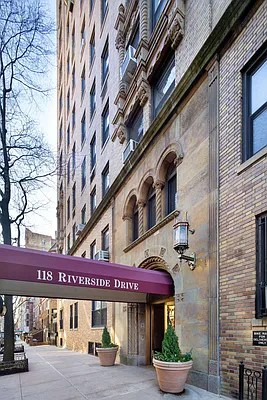
Last week I had a day haunted by my mother. It started with an unexpected email from a very old friend of hers with good wishes for the new year. Then there were the references to Jim Kitten’s work for Lyons’ catering arm in Matt Houlbrook’s The Song of Seven Dials which I am currently reading, prompting me to think about how the histories of migration and social integration my mother was mapping through her family history research in the final years of her life can engage with those Matt exposes in his excellent book. And finally my husband suggested that we watch Ben Stiller’s documentary about his parents, Jerry Stiller and Anne Meara. My brother had recommended it to us over the holidays, on the basis that there were a lot of shots of the apartment building where we grew. The Stillers were our neighbours, quite literally next door, occupying 5AB while we were in 5D, sharing a back hallway for the bins and the emergency exit stairway.
The emotional gut-punch of the film for me, however, wasn’t so much the images of the distinctive awning at the corner of 84th and Riverside, and Riverside Park, or even the Proustian emotions evoked by pictures of the Stillers from the 1980s, familiar from regular encounters in the lobby of a building Ben refers to accurately as its own eco-system. Rather it came from the framing of the documentary not only around the hours of home video and tape recording that Jerry Stiller made and preserved, but the clearing of the apartment and its subsequent ‘staging’ by realtors for sale. Because, about a year before, the same thing had happened in my mother’s apartment following her death from pancreatic cancer in 2018. (I say my mother’s apartment because it was the place she lived for nearly forty years, raised her children and died. It was also my father’s apartment throughout my childhood, but he gave her full ownership when they divorced at the turn of the 21st century, after which she redecorated, making it very much her own.)
The number of ways in which my mother’s memory was evoked that day may have been rather more intense than usual, but the fact is that, that I am reminded of her on an almost daily basis, even nearly seven and a half years after her death. I use her sewing scissors and cooking equipment. Some of her (many, many) books are now displayed on my bookshelves. I wear her earrings when I dress for professional speaking engagements in the hopes they will endow me with some of her skill in holding a classroom.
Her memory shapes other aspects of my professional life as well. Matt’s book is not the only work of history that I have read through the prism of my mother’s research into the complexities of the Gluckstein family, of which we are descendants. My responses to Laura King’s and Michael Roper’s books on the methodological importance of family histories have also been informed by her interest and the archive that she left me. Even more, my sense of myself as an academic has been shaped by the fact that my mother was, for many years, a teacher, and a very good one. Of the three main roles that 21st century academics are expected to undertake – research, administration and teaching – the last has always been the one I have had most difficulty embracing. While for many it is the primary role of a university lecturers, one which energises them and inspires their scholarship, for me it often feels like a duty that I will never be able to bear lightly or with grace. As a result, I don’t believe that I will ever have the skill, the creativity or the passion to inspire students as a truly great teacher (and I have had a few in my time) can. In short, I will never be as good at it as my mother was.
Why am I posting this now? Because, as of today, for the next eighteen months, I am in a position to be able to slough off the anxiety of never quite living up to my mother as a teacher as I attempt to fulfil the other ambition that we shared, to write full time. I am taking a sabbatical from Leeds to finish writing my next two books, a history of masculinity and warfare from 1750 to 2000 in global perspective, under contract with Polity Press, and a history of the social and cultural impact of First World War ex-servicemen on 20th century Britain, the book I have been trying to complete since the Men, Women and Care project ended in 2020. (It really is almost there; I have a central thesis and, I think, the right tone for a project that will be something more than an academic monograph).
But what I have realised in the past week, picking through the emotions arising from the reminders of my mother and her loss, as well as the fears that have surfaced as this change in circumstances grew ever closer, is that there are lots of other things I want to write as well – the history of Golden Age detective fiction and the world wars that has haunted me since I wrote my Phd thesis, a work of fiction that has been coming together, in fits and starts for nearly as long and, it turns out to my surprise, my take as a social and cultural historian of early twentieth century Britain on my family history. This last has been sparked in part by The Song of Seven Dials, which places Lyon’s in the context of the modernisation of London in ways which suggest further exploration of its creation as the family business of a complex family of Jewish immigrants could prove worthwhile, as well as by a request for information from my playwright cousin which prompted speculative questions about name changes by my ancestors. So yes, I might be ready to unpack the boxes in the office that are my mother’s archive and pick up the task of writing about her family which she never managed to complete herself.
I plan to reflect on my writing to some extent on social media (these days Bluesky rather than the site formerly known as Twitter), but not everything, particularly the family history, is suitable either for traditional publication or dissemination as a social media thread. All of which is a very long-winded way of saying that I will, once again, be reviving this blog as a space of record and reflection both on subject and process. Having tried to lay the groundwork for some effective writing habits through the semester of research leave I enjoyed at the end of 2025, I will use this space to keep me disciplined about writing something every day, as well as for exploring ideas as they emerge.
I hope you will join me as I shift gears and possibly course in this latest stage in my career as a historian and in the life of this blog.
I have a very bad habit of picking up any novel with a First World War or immediate post-war setting when I come across them in a second-hand book sale. My husband grumbles about my bringing yet more books into the house while, in my heart of hearts, I know that, more likely than not, I will spend most of the time I am reading them getting annoyed by inauthentic, not to say inaccurate, portrayals of the war which rely heavily on clichés. Yet I carry on doing it, in part in forlorn hope that I may encounter an original (and thus enjoyable) new author or series, and in part to remind myself of all the pitfalls to avoid when writing my own war-set fictions.
As painful as most of these are to read, in general I find there is enough to them, in terms of plot, characterisation or, very occasionally, setting, to keep me reading until the final pages. Certainly, I did manage to do this with Carola Dunn’s Die Laughing, in spite of its many short comings, and with Sulari Gentil’s A Few Right Thinking Men, which erred to much towards the thriller side of crime fiction for my taste, as including random fictional press clippings in a way that I found deeply confusing and off-putting. However, this cannot be said for my most recent acquisition, Caroline Dunford’s A Death in the Hospital (2020), which I picked up for 50 p. at our local National Trust property second-hand bookstall and which I abandoned about a quarter of the way through.
I had been vaguely hopeful about this novel, the 15th book in the Euphemia Martin series, which appears to still be going strong, with A Death at Christmas due out this year. After all, the war hospital setting was right up my street in terms of areas of historical interest, although this did risk a more than usual number of snorts at clichés about VADs and misuse of the term ‘field hospital’. What I didn’t expect, however, was a historical setting so inaccurate as to suggest that Dunford is not even familiar with Vera Brittain’s Testament of Youth, let alone any less ubiquitous representation of the British military medical services in the war. It was at the point where a hospital where the central character had gone undercover as a trainee nurse (not, apparently a VAD, although it remained entirely unclear what the character who made this distinction thought a VAD role entailed) was described as the first hospital of its type ‘since the Boer War or possibly the Crimean War’ that I gave up entirely. For the setting to have any meaning or interest, I did need to have evidence of some basic plausibility for the institution that formed that setting, including the awareness that the auxiliary hospital (which I think was what this one was supposed to be) was only one type of medical institution in Britain during the war. As well as the permanent military hospitals which treated the Regular army throughout the second half of the 19th and into the 20th century, at the outbreak of war, military hospitals were rapidly set up across Britain, usually in commandeered institutions. Where country houses were donated, these became auxiliary units, specialising in rehabilitation after initial treatment at a general hospital. The institution in A Death in the Hospital did not seem like any of these.
Which brings me to the second aspect that precluded my enjoyment of this book. In addition to the ahistorical setting, the question of timing made any suspension of disbelief I might have had impossible. The novel is, apparently, set in August 1914. Even if we assume that the book starts at the end of the month, in at most three weeks there has, apparently, been time for some sort of voluntary hospital to be set up and filled with wounded servicemen including at least one volunteer servicemen, although he just may have been a Territorial. It is also strongly implied that the military effort had achieved statis along the Western Front, although this wasn’t the case until the winter of 1914. In other words, the author attempts to invoke the war as historical context through clichés that ignore the somewhat atypical reality of the opening months of the war. This sort of telescoping of events is not just bad writing, it is terrible history.
I do like to think that I have a pretty high tolerance for inauthenticity in genre fiction set in the First World War, of which there is a remarkable amount. Yes, as I say, I do grumble about inappropriate uses of terms like ‘field hospital’ and conscientious objector, or assumptions about the incidence and understanding of executions and shellshock. But while reiterating worn tropes is boring and, for a historian, frustrating, I am aware that I bring a level of specialist knowledge to reading this type of fiction which gives me an unfair perspective. Where there is some evidence of basic historical research, some attempt to get to grips with the historic specificity of the world being depicted, I can usually suspend enough disbelief to at least finish the book. Here there was no evidence of any historicization, with events, ideas and innovations from at least three major conflicts mashed together in an ahistorical mess labelled ‘The First World War’ in a completely implausible time frame. It is the sort of historical fiction that makes me wish there were a way to certify an author’s credentials as a historical research before they are allowed to publish. Indeed, the only excuse for this sort of book, in my view, is the case it makes through absence for history, including that which informs creative products (films, television, art and games as well as literature) as an intellectual discipline that requires skill and rigour, not just a vague idea that the past is another country which might make for a romantic setting.
So A Death in the Hospital will return to the second-hand book sale table via my local charity shop, where I should clearly have left it in the first place.
The culture section of the Saturday edition of a major British newspaper runs a regular column in which celebrities in the arts are asked to identify subjects from their cultural life such as ‘The book I am currently reading’, ‘The instrument I wish I had learnt’ and ‘The last film that made me laugh/cry’. These lists are always fun to play along with but, while my answer to topics such as ‘My favourite piece of music’ has changed over the years, my answer to the regular question ‘The book I wish I had written’ has long remained the same: The Great War and Modern Memory by Paul Fussell.
Celebrity answers to this topic tends to be couched in terms of either a personally inspirational text or a best-seller that made the author a lot of money. In my case, the answer arises from a mixture of both. I first read The Great War and Modern Memory as a freshman, a first year undergraduate in my first semester at university. I thought at the time that I wanted to be an English major. By the end of the year, I knew that I would be a history major. This shift was only in part down to Fussell’s pivotal work of cultural history (Geoffrey Parker’s lecture on the possible role of sunspots in the development of early modern military strategy also had something to do with it), but what the book undoubtedly informed was my commitment to history that took fiction as one of its primary sources. This would shape not only my undergraduate module choices but the topic of my senior essay (an analysis of Ford Madox Ford’s Parade’s End tetralogy and R.H. Mottram’s The Spanish Farm trilogy as representations of the Western Front), but also my master’s and doctoral theses as well as almost every major work I have published since.
Of course, my view of Fussell’s work has evolved since then but that ‘heady mixture of literary criticism and cultural and historical analysis’ [1] remains deeply alluring as a point of reference not necessarily as a cultural history of the First World War, but as a pivotal moment in the cultural turn in First World War studies. As Ian Isherwood and Steven Trout argue in their excellent recent review article, ‘But It Still Goes On: Paul Fussell’s The Great War and Modern Memory at 50’, ‘the book is perhaps best approached as a an experimental study – a hybrid mixture … of literary scholarship, cultural analysis, historical writing, and veiled autobiography.’ [2] This hybridity, if not Fussell’s argument about the centrality of irony to a Modernist paradigm shift in cultural expression, has gone on to inform the approach and ambition of major works in the field, including Samuel Hynes’ A War Imagined (1990) and Jay Winter’s Sites of Memory, Sites of Mourning (1995), as well as many of their students, among whose number I include myself. And, in ‘reigniting a debate from the late 1920s and early 1930s over literary treatments of the Great War and their portrayal of disillusionment supposedly shared by an entire generation’ [3], Fussell helped shape what we now define as the canon of British First World War literature as surely as any writer, publisher or critic of the ‘war books’ boom. We cannot understand not only how we in Britain and the US remember the First World War today, but how it is represented in contemporary cultural forms. Alice Winn’s almost constant references to Robert Graves’ Good-bye To All That in In Memoriam (2023) provides only the most recent testimony to Fussell’s historiographic influence.
It is, as Isherwood and Trout note, the representativeness of the authors selected by Fussell for analysis that lie at the heart of many of the critiques of his approach. Yet representativeness was never really the point: ‘Drawn … to highly literate, middle-class junior officers like himself (albeit members of a different army in a different war), he never intended to write a comprehensive study of British Firs World War literature or, for that matter, an exhaustive treatment of British culture before, during, and after the conflict.’ [4] But that debate, with its echoes of the critiques of Douglas Jerrold and Cyril Falls [5], highlights an issue that those of us who use fictional, semi-fictional and poetic sources in our research and analysis still grapple with today. No cultural history of the war can ever be comprehensive, either in breadth or depth, particularly when the conflict is considered in global rather than national terms. How do we choose which texts to focus on? How do we balance close reading of the symbolism of particular texts with broad claims about the culture in which they were produced and which they sought to shape?
It is here that Isherwood and Trout’s identification of the importance of autobiography to Fussell’s endeavour spoke most strongly to me. Unlike Fussell (or indeed Hynes), I am not trying to use my practice of cultural history to grapple with experiences as a former soldier. I make no claims to, as Fussell did, to sharing a bond of experience with the authors he selected for particular consideration. But I have always been aware of the extent to which my own personal preferences and youthful exposure to particular literary works has shaped the texts I have chosen to focus on (the work of Dorothy L. Sayers being the most obvious example), as well as my vulnerability to the critique levelled by Charles Carrington against Fussell, that the analysis of someone who wasn’t there can never be a true history of the war. Indeed, as a newly minted PhD, I was bluntly told by one ex-serviceman (himself too young to have served in the First World War), that my thesis on representations of wartime masculinities was worthless because I was not a man and had not myself served in the war. (My gender and age clearly trumped my nationality in this instance as my critic chose not to point out the fact that, like Fussell, I am an American.)
So I take comfort from Isherwood and Trout’s argument that ‘Fussell’s status as a cultural outsider … sharpened his insights … and emboldened him to say things that he might not have if he had been British…. [H]is distance from the war’s living memory enabled him to study the “troglodyte world” of the trenches and the mythology it produced with fresh eyes.’ [6] Which is not to say that I necessarily take comfort from the text itself, which remains as challenging and provocative today in many ways as fifty years ago. For me today, the particular challenge of the autobiographical element is the most stimulating as I grapple with the ‘genealogical’ or ‘family history’ turn in social history, as exemplified by the work of Alison Light, Michael Roper and, most recently, Laura King. My family’s history doesn’t fit neatly with the history of the First World War, challenging cultural narratives of the war’s universality. But is this distance a handicap or a benefit? As I grapple with these questions as part of the process of writing my own book, The Great War and Modern Memory will continue to remain as much of an inspiration for my historical practice as it was when I first read it thirty years ago
[1] Ian Isherwood and Steven Trout, ‘But It Still Goes On: Paul Fussell’s The Great War and Modern Memory at 50’, The Journal of Military History, 89 (January 2025): 155-170 (160).
[2] Isherwood and Trout, ‘But It Still Goes On’, 158.
[3] Ibid., 160.
[4] Ibid., 160.
[5] Douglas Jerrold, The Lie About the War: A Note on Some Contemporary War Books (Faber & Faber, 1930); Cyril Falls, War Books: A Critical Guide (Peter Davies, Ltd, 1930)
[6] Isherwood and Trout, ‘But It Still Goes On’, 168
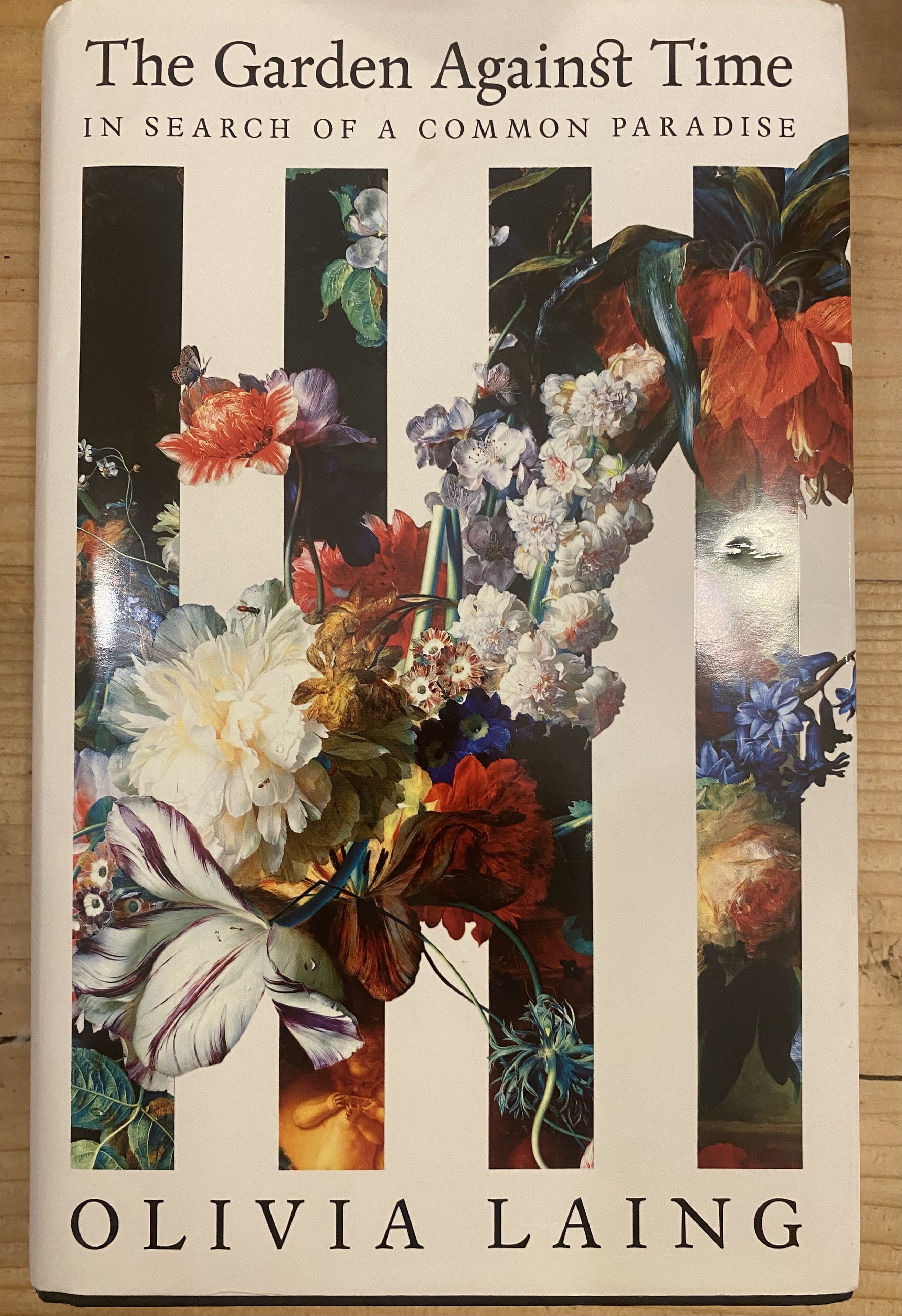
Several months ago a package arrived from Amazon containing a book. This is not an entirely unusual occurance in our household, although when we do buy books on line, it is more likely to be from bookshop.org or World of Books (my husband is a sucker for an ex-library edition). This package, however, was not an impulsive or accidentally overlooked purchase, but rather an unexpected un-birthday present from my stepmother, a copy of Olivia Laing’s much-praised The Garden Against Time. A few months later my husband gave me, as an actual birthday present and at my request, a copy of Penelope Lively’s even more critically acclaimed Life in the Garden.
Although I read them separated by several months, these two volumes have worked together in my head as part of a single genre of literary garden reflections. Both Laing and Lively write as both gardeners and writers, using the act of hands-on cultivation as a jumping-off point for reflections on the representational significance of gardens in predominantly Western, mostly British, culture. Both are erudite and both are beautiful objects (even the ex-library paperback edition of Life in the Garden), illustrated by a similary style of woodcut horticultural illustration.
Laing’s book is ostensibly structured by the story of her acquisition and reconstruction of a historic Suffolk garden, a process disrupted by the Covid-19 pandemic and its aftermath. Lively’s volume is, at least superficially, more academic than biographical, formed of series of essays on themes ranging from ‘Reality and Metaphor’ to ‘Time, Order and the Garden’. Yet it is Laing who spends signficant space in detailed analyses of John Milton’s Paradise Lost, W.G. Sebald’s The Rings of Saturn and the life and poetry of John Clare in terms which would not be out of place in an academic essay. Lively, meanwhile, ranges more widely in her references, with less critical depth but with a lightness of tone and analytic incisiveness that gives the book an immediatcy that is immensely engaging. As a result, I could see Lively’s Oxfordshire garden, created with her husband Jack, and the Egyptian garden of her childhood memories in ways that I could not with Laing’s restored greenhouse and pond. Although perhaps it was Lively’s early (and entirely accurate) identification of Tom’s Midnight Garden as one of the great works of 20th-century children’s literature that informed my sense of recognition and familiarity with her world and world view in ways that Laing’s work, for all its accomplishment never achieved. I have never read Sebald, and have only engaged episodically with Milton and Clare, whereas some of my most cherished memories of my mother revolve around her reading Tom’s Midnight Garden to me, first as a bed-time story and then on to audiotape, a process that, in the 1980s, was a true labour of love and dedication. I still have those tapes, the audio now preserved in digital form by my husband, although even now, over six years after her death, I am still not ready to listen to them and hear my mother’s voice reading to me again.
Nor are the intellectual contexts of the two books the only key differences which shaped my enjoyment. I found Lively’s writing much funnier than Laing’s, and was constantly reading out snippets of Life in the Garden to my husband. At no point was I tempted to do this with Laing, who also has a distancing literary tic of listing plants, many of them unfamiliar to a less-experienced gardener, without providing enough context to make them visible or meaningful to the reader. I think the idea is to evoke the poetry of gardening as well as the garden, but ultimate they just left me bored and confused. Laing’s discussion of John Clare’s life and work as a rural poet at the cusp of the industrial revolution was far more moving and effective, and has prompted me to seek out the poet’s autobiography, just as my husband, who read The Garden Against Time after I did, has purchased a (inevitably second-hand) copy of The Rings of Saturn.
I’m not a great reader of gardening books, and I read enough non-fiction for work that I tend to avoid such books as leisure reading, even when the genre overlaps with my own leisure interests. There is inevitably a lot of cultural history, often relevant to my own research, which precludes using such work as a way of fully switching off. But I am glad that I read both these books, not least for their many seredipties, and will certainly be dipping into Lively again, although I not so sure about Laing. In the meantime, with the snow falling outside, I will use them less as inspiration for the garden than for further reading, not only John Clare but also Lively’s fiction.
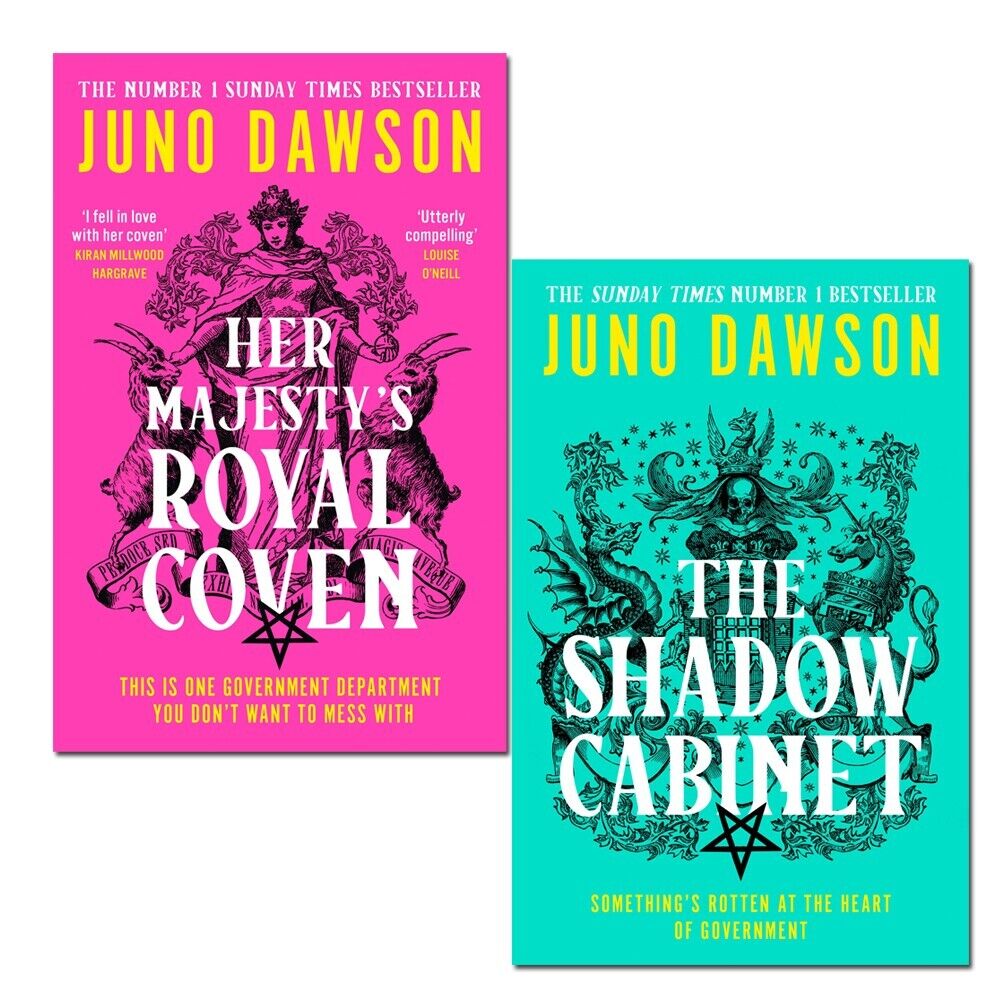
I was so looking foward to Juno Dawson’s Her Majesty’s Royal Coven. Modern witchcraft set in Hebden Bridge, which came highly recommended by both a friend whose taste I trust and the local bookstore that sold it to me? What could be better as escapist reading? In fact, I anticipated enjoying it so much that I bought the sequel before I even started the first volume and savoured my anticipation of losing myself in the West Yorkshire equivalent of Deborah Harkness’s All Souls series (recommened by another friend whose taste I trust and which I enjoy enormously).
So it is with great regret that I must inform you that Her Majesty’s Secret Coven is the lastest of my very rare ‘did not finishes’, and this was after I got over 150 pages in. Usually if I make it past page 50, I will keep going with a book, even if only out of pure bloody-mindedness. This, however, felt like too much of a slog. The characterisation was remarkably flat, particularly of the women who were portrayed as archetypes rather than indivuals. Given that this is a story predominantly about women, with a plot centring on female identity, this is a serious problem, one reinforced by a confusing plot with gaping holes in it. I spent most of the time struggling to understand what was happening or why characters were choosing to act in the ways described.
But the biggest disappointment was the aspect I had been anticipating most eagerly – the setting. As a Hebden Bridge resident, I freely admit to being an ‘offcumbden’. But the town and its surrounding villages have a unique enough personality for me to feel, even after only seven years of residence, that I know them at least a little bit. And they are definitely not the town depicted in this book. Yes, they form a small pocket of liberalism, not to say radicalism, enfolded by the Calder Valley in the more generally conservative rural West Yorkshire. And yes, the 1960s hippie vibe which is central to the town’s identity is being diluted by an influx of the professional middle classes (of which I freely admit to being one). Sitting halfway between Leeds and Manchester, even the vaguaries of Northern Rail cannot detract from the attraction of the town to commuters. But for all that, Hebden Bridge is still very much Happy Valley, not Nappy Valley. I don’t recall ever meeting a yummy mummy, as asserted in one description of a local café, and this is after five years of schoolgate attendance. Dawson appears to see Hebden Bridge as a version of Brighton in the north, which it is not. It is its own distinct place, with its own unique, often contradictory, always fascinating character, one which Dawson fails to capture.
The geography also doesn’t make sense. The book is full of descriptions of characters’ homes, but I was unable to locate any of them in my mental map of the area. The actual map that forms the frontispiece is no help, drawing as it does on the imagery of maps in fantasy novels. By the time I gave up, I found I was lost, not in the story but rather in confusion. I kept longing to find my way back tot he real world, rather than continue to make my way through a fantastical vision of the placy I call home, peopled by unreal phantasms, not people with recognisable conflicts and motivations. My recommendation is, if you want to discover the complex magic of Hebden Bridge through fiction, try the work of Sally Wainright rather than Juno Dawson. Happy Valley is on iPlayer and Riot Girls is due for broadcast this year. Or better yet, come visit, and experience this darkly enchanting place for yourself.
Having reflected on the recovery of the past year on New Year’s Eve, the start of the new year seems a good time to revisit and report back on the plans I made a year ago. I have also updated with some plans for the coming year.
Writing:
Reviews: I completed and submitted both book reviews due in early 2024, and both have been published. I now have a review (over)due that was supposed to be written by September, but I didn’t receive the book until October. This will be completed in the next couple of weeks.
Conference papers: I had to pull out of the conference on military welfare history as my injured knee made travel too complicated. The paper at the Academic Archers conference was well received, and I am contemplating proposing a follow-up (although not for this year’s on-line conference, sadly). I gave papers at a different conference on military history and, joyously, at the Dorothy L. Sayers Society annual symposium and helped organise a conference on military welfare history. In the coming year, I am already scheduled to give public lectures in February, June and November, and a conference keynote in February. I am also hoping to get to Austria for the Military Welfare History Network conference and to Greece for the International Society for First World War Studies conference, although I am not sure what, if anything, I will be writing for either.
The big one: The book. Definitely did not get finished this year. In fact, I have made very little progress, with the one chapter that I have worked on significantly currently is a state of chaos that terrifies me. I have done some initial work on other chapters, and do have a clearer sense of what I am trying to do, but I need more space to sit with this work than I have at the moment or am likely to until the summer at least. Work continues.
And the new project: The article on ambulance drivers never materialised, but in the spring I was approached by a publisher interested in a global history of masculinity and warfare. I have written a proposal and received encouraging feedback. I will be redrafting the proposal in the coming month. Should it be accepted, writing this will be the focus of my forthcoming research leave.
Knitting:
The cardigan that I started as a lockdown project still doesn’t have button bands, but I have bought the required wool from the supplier. It is next on the knitting project list. This may require another ball of wool from the supplier.
Three family sweaters were all completed in 2024, although my son’s was finished in a huge rush on 27th December. Only my husband received Christmas wool this year, as he has requested a replacement sweater for one he has worn to death. I have already made a start on this and am making good progress as I still can’t ski due to the knee injury.
And the new projects: I still haven’t come up with a project for the reclaimed wool from the baby blanket, but I have just offered to make a non-knitting friend a cable sweater. I will be knitting some swatches to test the gauge when I get home, and hoping she likes the colour. If not, I have a large stash of other colours, hopefully something suitable will be found. I also bought myself a copy of Margery Allingham’s Mysterious Knits(coincidentally by the same designer as my friend’s requested sweater) for my birthday and have bought myself a Christmas present of wool for one of the sweater patterns. So it looks to be a year of Kate Davies knits for me this year.
Quilting:
Autumnal quilt. I have not touched this this year.
Alice’s Wonderland quilt: Completed, long arm quilted, bound and given to its intended recipient. I am enormously proud of myself and of it.
Aurora Stars Tricolour quilt: Last year’s new project. I haven’t quite completed the quilt top, but hope to be able to do so in the next couple of months, having just ordered the backing and binding fabrics. However, there are…
The new projects: Instead of wool, this year I gave my children the materials for their quilts, a full kit for my son, a BOM for my daughter. I have also built up enough of a fabric stash to start compiling the materials needed for my nephew’s quilt top. I will have a significant period to focus on these during my period of recovery from surgery, which will hopefully happen in the spring, but we will have to see how far I get with these.
In the kitchen, the garden and the house:
As ever, the annual events of the kitchen and garden recur.
Marmalade.Successfully made, in spite of my impairment. The kits for this year’s batch are on order.
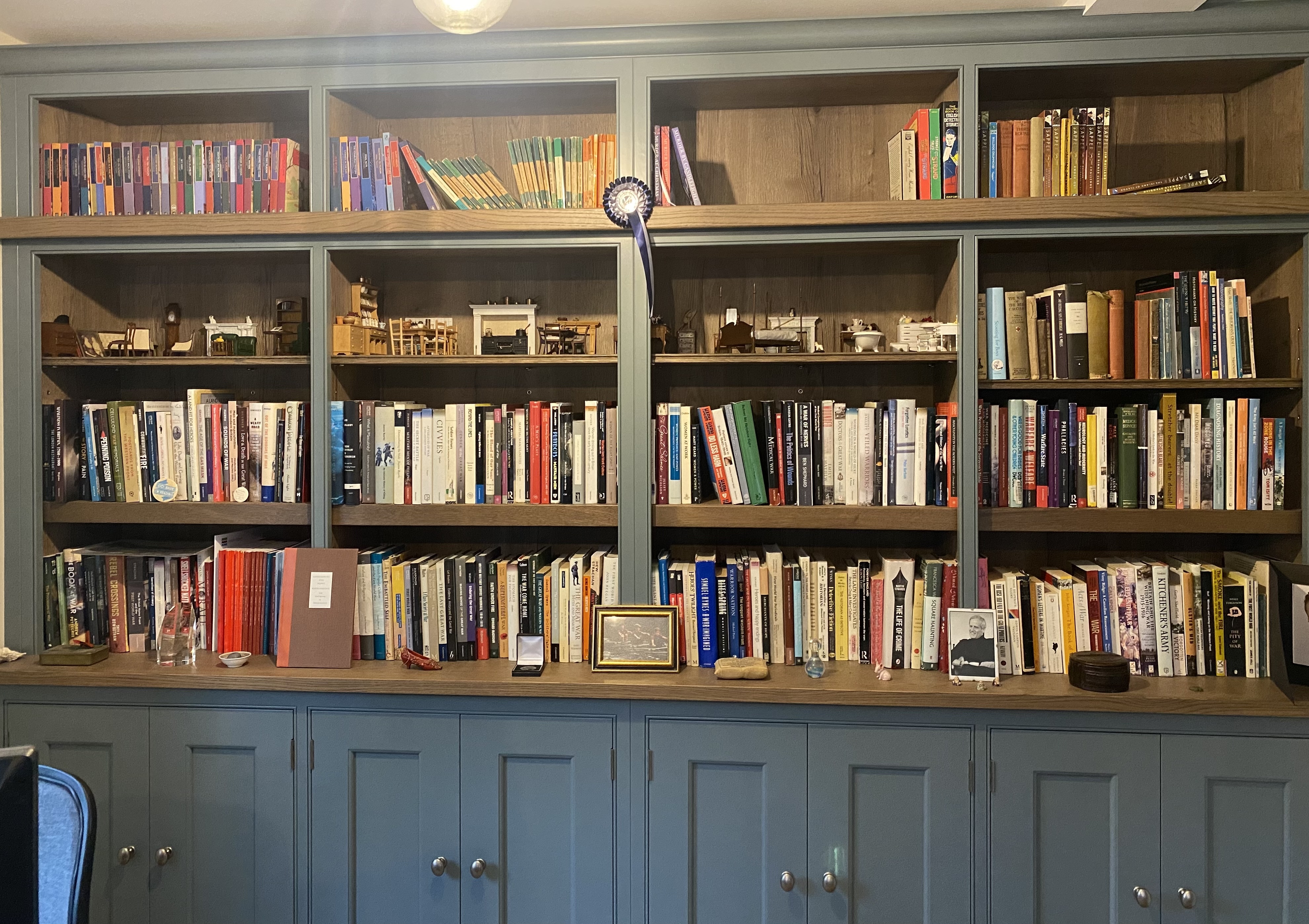
Germination: One of the great achievements of last year was the completion of two big house renovation projects, an update to the family bathroom and the complete redesign of the utility room and office, a project that involved replacing the roof over that part of the house. This has given us not only a lovely space to work in (with, miraculously, enough shelf space for all our books!) but also a large space for potting and germinating. As the greenhouse still doesn’t exist, this will do for now.
The front bed has been dug over, although too late to plant the intended bulbs. I will be putting in shrubs, including a gift from an old family friend, in the spring, Then I need to work out what to do with all the rocks that I removed as part of the process.
Plant-based baking: The cinnamon rolls never did happen. I may try again this year.
And the new project: Having completed the bathroom and office space, the next challenge is redecorating the rest of the house. I am hoping my husband will get around to laying the wood floor in the living room. My goal is to paint the front hallway so that we can finally hang the artwork that is currently occupying a corner of the spare room.
As with last year, these are ambitious goals which will not be completed, but I fully intend that this year shall be different in terms of the pattern and pacing of my work across the different categories. There will be changes this year, some them scary, but all, I think, necessary to enable me to tackle the goals outlined above.



 armsandthemedicalman